
The Future of Authenticity: The Best Authentication Solution for Goods
1. The Erosion of Value: Analyzing the Crisis in Global Authentication
In the contemporary luxury landscape, we are witnessing a collapse of the traditional barriers to entry for counterfeiters. The threat is no longer merely "cheap knock-offs"; it is the proliferation of "virtually indistinguishable" fakes that threaten the very marrow of brand equity. When a consumer can no longer distinguish between genuine craftsmanship and a sophisticated clone, the premium price point of a luxury brand becomes indefensible. This is not a hypothetical risk—it is a measurable hemorrhaging of capital. In the sports apparel sector, brands are currently losing millions annually, to counterfeit jerseys and gear.
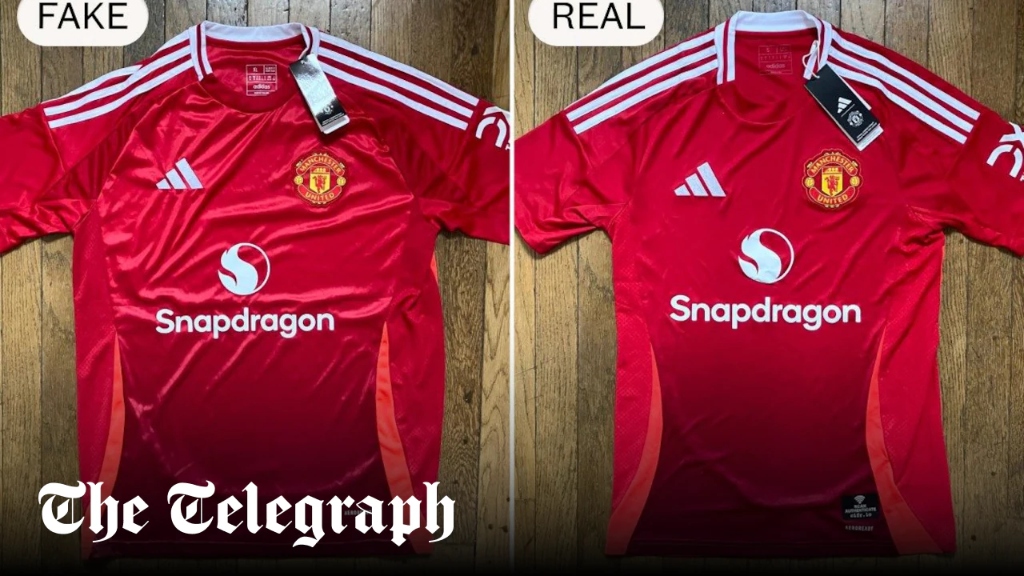
Read more about the fake Premier League kits underground world at The Telegraph
The failure of legacy security measures is an indictment of static thinking. Traditional tools like QR codes and holograms are no longer deterrents; they are liabilities. Solutions like Certilogo—utilized by brands such as Stone Island and Versace—rely on QR codes that can be printed in infinite quantities or redirected to fraudulent URLs, making both phishing and counterfeiting trivially easy. Similarly, the "security" of holograms has evaporated. In the early 2000s, the machinery required to produce these seals cost upwards of $3 million; today, the barrier to entry has collapsed to as little as $12,000.
To protect value in a world of microscopic margins and macroscopic fraud, we must move beyond these easily bypassed visual cues toward a model that bridges the digital and physical divide with cryptographic finality.
Legacy vs. Modern Authentication Vulnerabilities
| Feature | QR Codes | Holograms | Cifr Chips |
|---|---|---|---|
| Clonability | Extreme (Infinite copies; prone to phishing/URL spoofing) | High (Machinery costs collapsed from $3M to $12K) | Impossible (Uses secure element cryptographic signing) |
| Engagement Potential | None (Static link to a vulnerable website) | None (Purely physical/visual) | High (Dynamic gateway to apps, rewards, and content) |
| Security Layering | Single (Physical print only) | Single (Physical visual only) | Dual (Physical Secure Element + Digital Immutable Ledger) |
2. The Cifr Architecture: Engineering an Unclonable Identity
Achieving true "anti-cloning" status requires a mandatory strategic pivot: we must secure both the physical and digital layers of a product simultaneously. Any system that protects only one side of this equation is fundamentally broken. The Cifr architecture is engineered to ensure that an attacker must compromise both a sophisticated, patented hardware component and a decentralized digital ledger—an undertaking that is cryptographically and logistically insurmountable.
The Cifr "Two-Layer Protection" model is built on two reinforcing pillars:
- The Physical Layer: Unlike commodity NFC chips, which are simple memory devices that can be skimmed and replicated, Cifr utilizes a Secure Element. This is a dedicated cryptographic device embedded within the product that performs internal security operations. It does not simply "store" data; it signs transactions using advanced cryptography. The chip is the guardian of the identity; it cannot be cloned by copying data.
- The Digital Layer: Cifr leverages the Solana blockchain as its immutable ledger. We view blockchain not as a speculative product, but as a critical tool that solves real, painful problems regarding data integrity. By recording every product’s serial number and ownership on a tamper-proof record, we establish a singular "source of truth" that exists independently of the brand’s internal databases.
To address varying levels of threat and product value, the technology is deployed across two tiers:
- Cifr Max (Premium Tier): Features patented technology with enhanced computing power for complex operations. It utilizes Lattice-based cryptography, employing the Falcon and Kyber algorithms to ensure the product is quantum-resistant and future-proofed against emerging computing threats.
- Cifr X (Standard Tier): Built on high-efficiency Elliptic Curve Cryptography (ECC). While others use legacy curves, Cifr X utilizes the Ed25519 curve, offering superior performance and security over the standard secp256k1 used in basic crypto applications.
This architecture creates a defensible moat for luxury brands. By utilizing patented manufacturing barriers rather than commodity hardware, Cifr ensures the cost of counterfeiting remains prohibitively high. Once this technical foundation is secured, the physical object is no longer a static item; it is a gateway to high-value consumer engagement.
3. The Strategic Pivot: Turning Products into Digital Passports
We are witnessing a transition from "static verification" to "dynamic engagement." In this new paradigm, a physical product serves as a "Digital Passport." The act of purchase is no longer the end of the customer journey; it is the beginning of a continuous, interactive brand experience.
By treating the Cifr chip as a "programmable ticket," brands can deliver ongoing value post-purchase. This creates a market-clearing mechanism: when the digital utility of a genuine product—access to exclusive rewards, content, and communities—cannot be replicated by a counterfeit, the fake item becomes economically non-viable. The "utility gap" between a real and a fake item becomes so vast that the consumer’s choice is no longer based on price, but on access.
Key Value-Add Digital Features:
- Exclusive Content: Verified owners gain access to behind-the-scenes footage, brand stories, or interviews that are mathematically locked to the chip.
- Interactive Rewards: Programmable perks such as loyalty points, instant discounts, or early access to new releases.
- Personalized Interactions: Tailored messaging and membership badges that recognize the consumer’s verified status.
This self-reinforcing cycle of authenticity ensures that real-goods buyers are constantly rewarded, making the purchase of a counterfeit a losing proposition both socially and functionally.
4. Sports Apparel: More Than Just a Jersey
Imagine buying an authentic Manchester United jersey and scanning it at Old Trafford on matchday. Instantly, the club’s system recognizes you as a verified fan. This could feed a fan leaderboard (e.g. counting how many games you’ve attended), or credit loyalty points on a mobile fan card. These points might unlock real-world perks – stadium concessions discounts, merchandise coupons, or priority ticket access. The jersey’s chip could also deliver exclusive content: for instance, fans in South Africa could tap their PSG shirt to watch club highlights or behind-the-scenes videos that only members see. Many of these ideas are already in play: NFC merchandise can “bring fans closer to the action,” offering exclusive content, instant rewards, or behind-the-scenes access via a simple tap.
In practice, a connected jersey might work like this:
- Game Attendance Tracking: At the stadium entry, a quick tap logs your presence. Over a season this adds up on a fan “match meter” or leaderboard, rewarding the most dedicated supporters.
- Exclusive Media & Content: Tapping the shirt’s chip opens special video highlights or interviews. Clubs already publish subscriber-only content, and a connected jersey would deliver it directly to authentic owners.
- Stadium Discounts & Offers: The app can identify you as a legitimate fan and apply discounts on food, drinks or merch. In effect, the chip serves as a VIP loyalty card.
- Priority Ticket Access: Loyal, verified fans might get first dibs on sellout tickets. (Adding a digital credential to the jersey could tie into ticketing systems to enable fan-only presales.)
This goes far beyond simple authentication. By design, the Cifr chip rewards authenticity with engagement. Fans become ambassadors: they not only prove they own the real jersey, but they earn recognition and perks for being a bona fide supporter. In industry terms, connected merchandise “seamlessly merge[s] the physical and digital worlds,” offering “unique, secure, and memorable experiences” that deepen fan loyalty.
5. Strategic Theater: Luxury Watches, Provenance, and Prestige
In the horology market, a watch is a financial asset and a status symbol. Provenance—the documented history of ownership and service—is the single most critical factor in a timepiece’s long-term value. Traditional paper certificates are bulky, easily forged, and often lost over decades.
The Cifr "Digital Passport" concept for horology replaces these vulnerabilities with an immutable blockchain record of:
- Serial numbers and warranty status.
- Comprehensive service and maintenance history.
- A transparent, tamper-proof log of previous ownership.
Beyond asset security, the chip enables a "prestige layer." Following the lead of Vacheron Constantin’s "Hour Club" or Breitling’s partnership with Arianee, the Cifr chip acts as a "lifestyle pass." It grants owners entry to exclusive brand events, private apps, and bespoke content. This "digital twin" ensures the brand maintains a direct relationship with the owner, even as the watch moves through the secondary market. For the high-end collector, the chip digitizes warranty, VIP access, and social status into a single, unclonable package.
6. Strategic Theater: Collectibles and the Tokenization of Rarity
The secondary markets for trading cards (e.g., Topps, Pokémon) are plagued by volatility and sophisticated fraud. In a market where rarity and condition are the primary drivers of value, "Public Provenance" is an absolute necessity.
The lifecycle of a connected collectible begins with the creation of a "Digital Twin" (NFT) on the blockchain. When a Cifr chip is integrated into a card, it carries a tamper-proof record of its grading report, print run, and issue date, eliminating the "fake-card" problem that currently undermines collector trust.
The three most critical takeaways for collectors are:
- Immutable Provenance: A simple tap reveals the card’s entire history, making counterfeits instantly detectable and ensuring every transfer is recorded.
- Secondary Market Trust: Buyers trade with confidence knowing the blockchain proves authenticity, while brands can capture royalties on resales, turning the secondary market into a revenue stream.
- Community-Based Utility: Genuine card holders gain access to exclusive virtual clubs, voting rights in fan polls, or early access to limited-edition drops.
By tokenizing rarity, Cifr transforms a static collectible into a living, interactive asset that provides both financial security and community engagement.
7. The Cifr Ethos: Merging Genetic Coding with Cryptography
The philosophy behind Cifr is rooted in the unique background of its founder, who views the challenge of product identity through the lens of genetic engineering. DNA is nature’s programming language—it solves complex problems with microscopic precision. Cifr applies that same biological logic to global commerce, creating a technological "DNA sequence" for physical goods.
This journey began with a fascination for encoded information, leading to an M.Sc. from the University of Leicester in 2020. The urgency of Cifr’s mission was reinforced by the 2014 Heartbleed vulnerability, a watershed moment that proved even the most widely used security tools have catastrophic flaws. After contributing to high-stakes security projects for the U.S. Department of State and undergoing formal cryptography training at Stanford University, the founder developed the patented Cifr architecture to bring the trust of decentralized networks to the physical products we touch every day.
The war against counterfeiting cannot be won with barriers alone; it requires a "Culture of Authenticity." By rewarding owners for buying real goods, we make the choice to buy "real" about more than just ethics—it becomes about access. Our mission is to make checking a product's genuineness as ubiquitous and effortless as scanning a boarding pass, turning every authentic product into a portal of limitless possibility.