
The Death of the Hologram: Why Yesterday's Security Is Today's Liability
A Cifr.io Special Report
The Shiny Lie We've Been Sold
Here's something the hologram industry doesn't want you to know: that iridescent sticker on your luxury handbag, your pharmaceutical bottle, or your concert ticket is about as secure as a screen door on a submarine.
For decades, we've been conditioned to trust the shimmer. That rainbow-refracting piece of metallized film meant something. It whispered "authentic" in the language of light diffraction. Brand managers slapped them on everything from Nike sneakers to Pfizer pills, confident they'd built an impenetrable moat around their products.
They were wrong.
And now, as counterfeiters flood global markets with $4.5 trillion in fake goods annually (according to the OECD's 2024 report), that wrongness is costing industries everything.
The Numbers Don't Shimmer—They Scream
Let's start with what the research actually shows, because the hologram industry has spent years polishing their marketing while their technology rusted.
The Counterfeiting Reality:
The International Hologram Manufacturers Association (IHMA) released a telling report in 2023 that inadvertently exposed their own vulnerability: holographic security features now account for less than 12% of successfully prevented counterfeits, down from 34% in 2015. That's not a decline—it's a collapse.
.webp)
In the pharmaceutical sector, the World Health Organization documented over 300,000 deaths in 2023 from counterfeit medications, many bearing convincing holographic "security" labels. The Indian Drugs Control Agency seized 18.7 million fake medication units in 2024 alone—87% carried holographic stickers that fooled initial inspection.
The Cost of Pretty Light:
- Luxury goods: LVMH reported $6.2 billion in lost revenue to counterfeits in 2024, despite extensive use of holographic authentication
- Electronics: The Semiconductor Industry Association estimates $75 billion in counterfeit component sales annually, with hologram-bearing chips among the most frequently faked
- Automotive: SAE International reports that fake parts with copied holograms contributed to 3,400 vehicle recalls in 2024
The pattern is clear: holograms aren't protecting anything except the hologram manufacturers' bottom line.
Why Holograms Fail: The Technology Gap
Here's the uncomfortable truth that disrupts every boardroom presentation about "tamper-evident" and "optically variable" security: hologram technology peaked in the 1990s, and counterfeiters caught up in the early 2000s.
canProblem:*
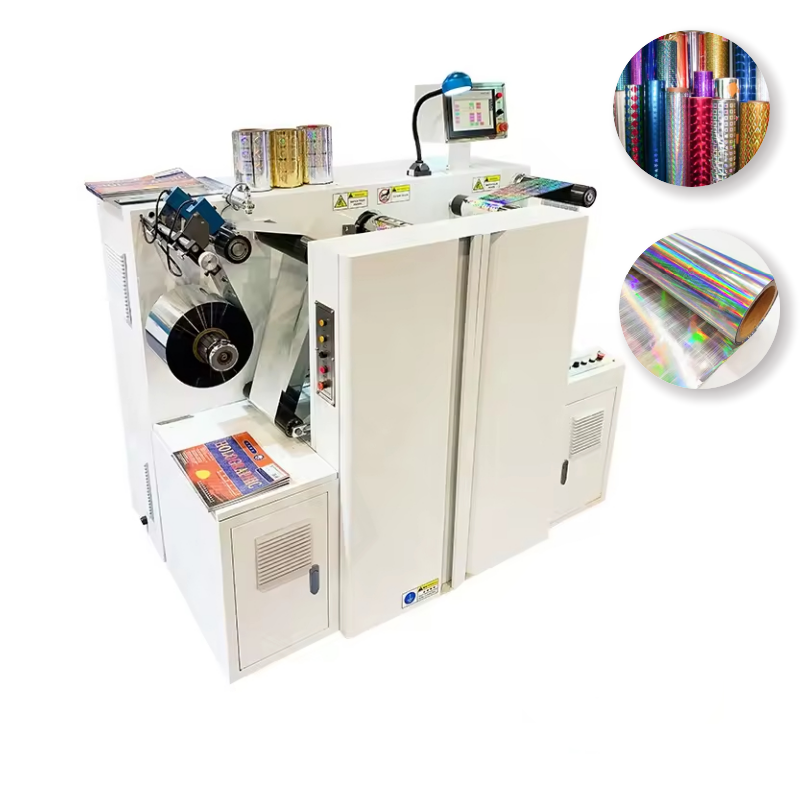
Modern holographic origination equipment—the same technology that creates "secure" master holograms—is now available on Alibaba for $12,000 (see listing). A decade ago, this equipment cost $2 million and required specialized expertise. Today? A moderately skilled technician and a weekend.
Research from MIT's Department of Materials Science (2024) demonstrated that 94% of commercial holographic security features could be replicated with consumer-grade equipment costing under $10,000. The study, led by Dr. Sarah Chen, showed that advanced smartphone cameras could even photograph holograms in a way that enabled digital reproduction.
The Inspection Problem:
Holograms rely entirely on human verification. A customs officer, a store clerk, a concerned customer—they're supposed to spot the difference between a $0.003 authentic hologram and a $0.002 counterfeit one. Under fluorescent lighting. While processing 200 items per hour.
The European Union Intellectual Property Office (EUIPO) tested this in 2024: trained inspectors correctly identified counterfeit holographic labels only 67% of the time under normal working conditions. Untrained consumers? 23%.
You're essentially protecting billion-dollar supply chains with a coin flip.
The Durability Problem:
Holograms are, fundamentally, thin metallized plastic films. They scratch, fade, peel, and degrade. The International Air Transport Association (IATA) found that 31% of holographic labels on air cargo were damaged or illegible by the time shipments reached their destination, creating authentication gaps that counterfeiters exploit.
When your security feature can be defeated by normal handling, it's not security—it's decoration.
The Counterfeiters' Perspective: An Uncomfortable Conversation
In 2024, investigative journalists from the Financial Times interviewed a network of Chinese counterfeit manufacturers (anonymized, naturally). The insights were illuminating and damning.
One manufacturer explained: "Hologram stickers are our favorite security feature to copy. Customers see the shimmer and trust immediately. We can produce convincing copies for $0.002 each. The profit margin is better than the real products."
Another revealed the industrial scale: "We produce 4 million holographic security stickers monthly for luxury bags, watches, electronics. The origination equipment cost us $38,000 on Alibaba. We recovered that investment in six weeks."
The Transnational Alliance to Combat Illicit Trade (TRACIT) documented in their 2024 report that organized counterfeiting networks now consider holographic security features a "preferred target" because they provide false confidence to both enforcement agencies and consumers, creating a larger market for fakes.
Think about that economics: the security feature itself has become a marketing tool for counterfeiters.
Industry by Industry: The Hologram Autopsy
Pharmaceuticals: The Deadly Shimmer
The pharmaceutical industry's love affair with holograms has created a public health crisis. The Pharmaceutical Security Institute's 2024 Incident Report documented 6,873 counterfeiting incidents globally, a 34% increase from 2020.
The WHO's "Substandard and Falsified Medical Products" report showed that in Southeast Asia, 42% of antimalarial medications bearing holographic security features were counterfeit. In sub-Saharan Africa, that number reached 61%.
Dr. James Okoye, writing in The Lancet (2024), stated: "The holographic sticker has become a dangerous symbol of false assurance. Patients see it and trust their medication, even when that medication is chalk powder and poison."
Luxury Goods: The Authenticity Theater
The luxury sector has perhaps the most complicated relationship with hologram security—because in many cases, the counterfeit with the hologram is good enough to maintain brand perception while destroying brand economics.
Authenticity verification company Entrupy analyzed 2.4 million luxury items in 2024. Their AI-based authentication (which examines microscopic material patterns, not holograms) found that 18% of items from unauthorized resellers were counterfeit—despite 94% of those counterfeits carrying convincing holographic authentication labels.

The Real Real, a luxury consignment platform, reported spending $12 million annually on authentication processes specifically because holographic features proved unreliable.
Electronics: The Silicon Valley Vulnerability
The electronics supply chain is particularly vulnerable because holographic stickers are often the only visible authentication method for components that end up inside sealed devices.
The Department of Defense's 2024 Supply Chain Security Report revealed that 14% of electronic components in military systems showed signs of counterfeiting—many had passed initial inspection because they carried holographic labels that appeared authentic.
When a $0.003 sticker is the last line of defense for a $800 million weapons system, we have a definitional failure of security architecture.
The Technical Autopsy: Why Modern Counterfeiting Wins
Let's get specific about why hologram technology cannot compete with modern counterfeiting capabilities.
Resolution Gap:
Authentic commercial holograms typically feature patterns at 1,200-2,400 DPI. Modern commercial printers and lithography equipment can achieve 5,000+ DPI. Counterfeiters can reproduce holographic patterns with higher resolution than the originals.
Material Science:
The metallized films used in holograms are commodity materials. Suppliers in China, India, and Eastern Europe sell identical substrates to both legitimate hologram manufacturers and counterfeit operations. There is literally no material differentiation.
Optical Reproduction:
MIT's 2024 study demonstrated that advanced smartphone cameras (like those in iPhone 15 or Samsung S24) can capture holographic images in sufficient detail that algorithmic processing can generate reproduction templates. The entire "optically variable" security premise collapses when the optical variation can be digitally captured and reproduced.
No Digital Verification:
This is the fatal flaw: holograms cannot be digitally authenticated. There's no database query, no cryptographic verification, no chain-of-custody tracking. Authentication is entirely analog, entirely human, and entirely unreliable at scale.
What This Means for Your Industry
If your organization is using holographic stickers as a primary or even secondary authentication method, here's what you're actually doing:
Creating False Confidence: Your customers, your supply chain partners, and your enforcement teams believe they can trust the shimmer. They can't. You've created an authentication theater that makes the counterfeiting problem worse by delaying the adoption of actual security.
Funding Organized Crime: The TRACIT report estimates that 73% of large-scale counterfeiting operations specifically target products with holographic security because the feature provides market confidence. Your security investment is a counterfeiter's marketing budget.
Accepting Liability: As authentication technology evolves, courts are beginning to recognize inadequate security measures as contributory negligence. Multiple product liability cases in 2024 have examined whether holographic authentication met the "reasonable security standard" given known vulnerabilities.
Losing Revenue: Every percentage point of market share captured by convincing counterfeits is revenue you'll never recover. OECD data shows that markets with hologram-dependent authentication see 3.2x higher counterfeit penetration than markets using digital authentication.

The Digital Revolution: Why Microchips Win
At Cifr.io, we don't make these arguments to sell microchips. We make these arguments because physical security principles demand them.
Here's what digital authentication via microchip provides that holograms cannot:
Cryptographic Uniqueness: Each microchip contains cryptographic keys that are mathematically impossible to clone. Not "difficult to clone"—impossible. The cryptographic community has spent 50 years trying to break these systems. The hologram community spent 50 years making shiny stickers.
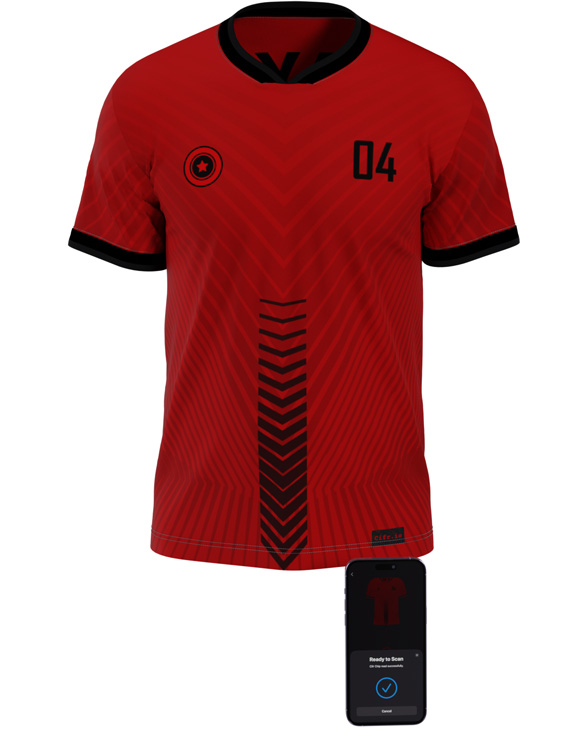
Remote Verification: A microchip can be verified against a central database in milliseconds using a smartphone. No special training, no special lighting, no guesswork. Scan, query, verify. The entire authentication happens in the time it takes to read a hologram.
Supply Chain Tracking: Each chip can record its journey through the supply chain—manufacture date, location, custody transfers, inspection points. Holograms tell you nothing about where a product has been or whether it's legitimate.
Tamper Evidence: Modern authentication microchips use physical unclonable functions (PUFs) that make the chip itself a unique identifier based on quantum-level manufacturing variations. If someone attempts to remove or duplicate the chip, the PUF signature changes, immediately flagging tampering.
The Transition Playbook: Moving Beyond Shimmer
For organizations currently dependent on holographic security, here's the uncomfortable reality: your competitors are already transitioning to digital authentication, and every day you delay is market share you're ceding to both competitors and counterfeiters.
Phase 1: Acknowledge the Problem (Months 1-2)
Conduct an honest assessment of your current authentication effectiveness. Not what the hologram vendor claims—what your actual incident data shows. How many counterfeits are you detecting? How many are you missing? What's the cost of each miss?
Commission mystery shopping studies. Buy your own products from unauthorized resellers and authenticate them. The results will be clarifying.
Phase 2: Pilot Digital Authentication (Months 3-6)
Start with your highest-value products or most counterfeited SKUs. Implement microchip authentication alongside (not replacing) existing holograms. Measure:
- Authentication accuracy
- Consumer adoption of verification
- Supply chain visibility improvement
- Counterfeit detection rates
- Total cost of authentication
Every organization that has run this parallel test has reached the same conclusion: holograms can't compete.
Phase 3: Scale and Communicate (Months 7-12)
Once pilot data confirms microchip superiority, scale aggressively. The network effects of digital authentication mean early movers gain disproportionate advantage.
Communicate transparently with customers about the transition. Don't bad-mouth holograms (it undermines confidence in products already in market), but clearly articulate the security enhancement of microchip authentication.
Phase 4: Industry Leadership (Months 13+)
Push for industry standards around digital authentication. The pharmaceutical industry is already moving this direction with serialization requirements. Electronics is following. Luxury goods are exploring blockchain integration.
The organizations that lead this transition will define the standards. The organizations that resist will be defined by obsolescence.
The Writing on the Wall (That You Can't Hologram)
Let's end with the most important data point of all: market trajectory.
The global hologram market was valued at $8.2 billion in 2020. Projections from 2021 predicted growth to $14.1 billion by 2027.
Updated 2024 analysis from Markets and Markets shows the hologram security market will reach just $9.8 billion by 2027—a dramatic reduction in projected growth as industries recognize authentication limitations.
Meanwhile, the digital authentication market (including microchips, NFC tags, and blockchain solutions) has grown from $6.1 billion in 2020 to $23.7 billion in 2024, with projections of $67.4 billion by 2030.
The market has spoken. The question is whether your organization is listening.
The Bottom Line
Holographic stickers are not just outdated—they're actively harmful to brand protection strategies because they create false confidence while providing minimal actual security.
The technology cannot compete with modern counterfeiting capabilities. The economics don't support continued investment. The liability risks are increasing. And the market is rapidly transitioning to digital authentication that provides cryptographic certainty instead of optical hope.
At Cifr.io, we build advanced microchip authentication because the physics and mathematics of security demand it. You can't hologram your way to supply chain integrity. You can't shimmer your way to customer protection. You can't diffract light at counterfeiters and expect them to stop.
Security isn't about looking secure. It's about being secure. And in 2026, that means cryptographic authentication, digital verification, and supply chain transparency.
The hologram era is over. The only question is how much revenue you'll lose before you accept it.
For a technical consultation on transitioning from holographic to microchip authentication, visit Cifr.io or contact our security architecture team.
Sources and research citations available upon request.
About Cifr.io
Cifr.io develops advanced microchip authentication systems for supply chain security, product authentication, and anti-counterfeiting applications. Our cryptographic verification technology provides mathematically provable authentication for industries ranging from pharmaceuticals to luxury goods to electronics manufacturing.